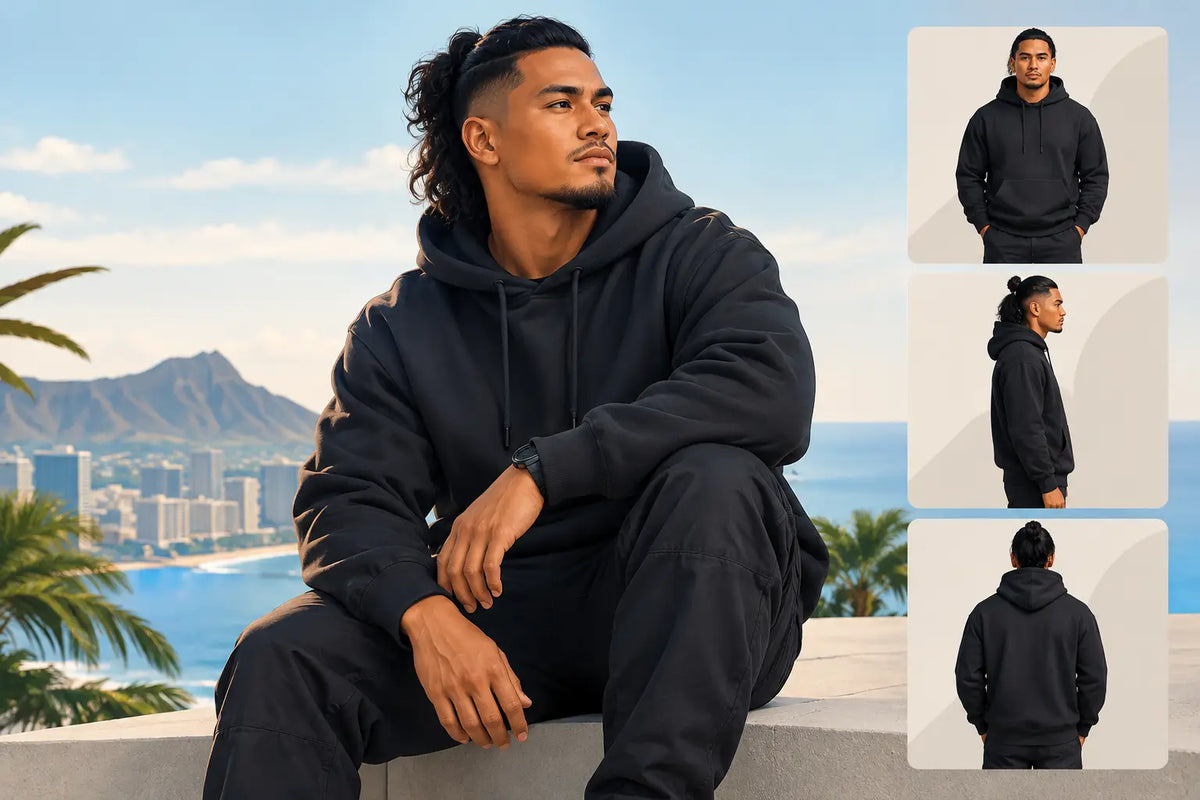
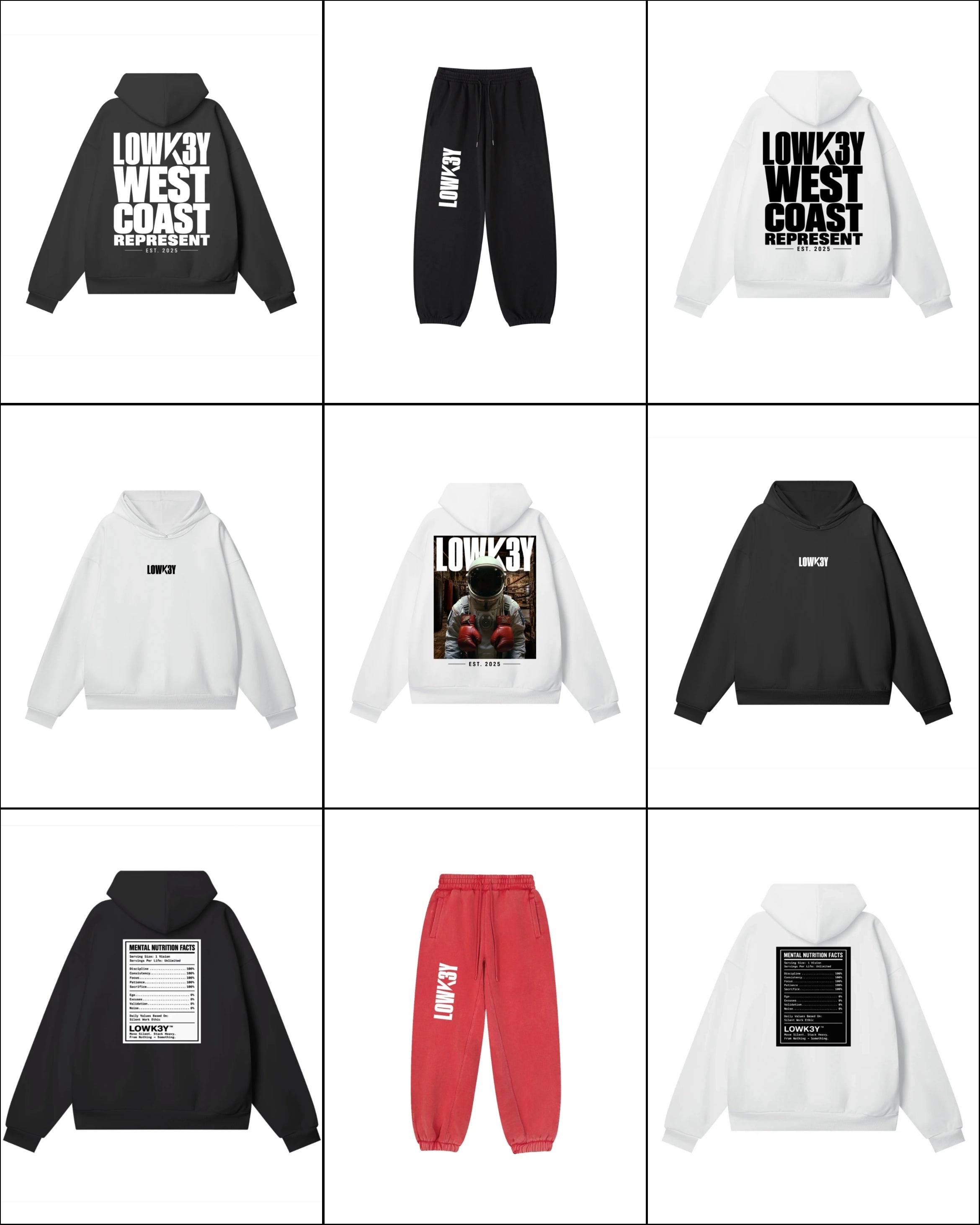


A hoodie can carry a graphic, but fabric carries the standard. This premium hoodie fabric guide is for people who know the difference between something that merely looks substantial online and something that earns its place in rotation. The right hoodie holds its shape, wears with purpose, and feels better after the work, not worse.
A premium hoodie is not defined by a logo, a price tag, or a loud claim. It is defined by weight, fiber, construction, finishing, and the choices made when nobody is looking. That is the point. Private work creates public presence.
What Premium Hoodie Fabric Should Feel Like
The first test is simple: pick it up. A quality heavyweight hoodie should have real density without feeling stiff like cardboard. It should drape with structure, not collapse around the body or cling like a thin tee. The exterior should feel clean and substantial. The interior should feel comfortable against skin, whether it is brushed fleece or unbrushed loopback.
Weight is usually measured in GSM, short for grams per square meter. It is not the only measure of quality, but it is an honest starting point. Lightweight fleece often sits around 250 to 300 GSM. Midweight fabric commonly lands between 300 and 400 GSM. For the heavyweight category that defines serious streetwear, look toward roughly 400 GSM and above.
More GSM does not automatically mean better. A 500 GSM hoodie made from weak, short-staple yarn can still pill, twist, and lose its form. But when dense fabric is paired with quality cotton, careful knitting, and proper finishing, it gives a hoodie that grounded, built-to-last feel. Stack heavy. Wear the proof.
Cotton: The Foundation of a Better Hoodie
Cotton is the main character in most premium fleece for good reason. It is breathable, naturally soft, absorbent, and capable of becoming more personal with wear. A cotton-forward hoodie has a more authentic hand feel than a garment overloaded with synthetic fibers. It can also develop a better lived-in character over time.
Not all cotton is equal. Longer cotton fibers generally produce smoother, stronger yarns with less fuzz on the surface. That matters because loose surface fibers are more likely to pill. Ring-spun cotton is another positive signal: the fibers are twisted into a finer, softer, more durable yarn than basic open-end cotton.
For a heavyweight streetwear piece, 100% cotton can feel exceptional, especially in dry, structured fleece. It has presence. The trade-off is that pure cotton may shrink more if it has not been pre-shrunk and can take longer to dry. It also needs better care. That is not a flaw. It is the cost of choosing a natural material with character.
Cotton-Poly Blends: Structure Meets Utility
Polyester has a role when it is used with intention. A cotton-poly blend can improve shape retention, reduce shrinkage, speed up drying, and add durability for repeat wear. This can make it a smart choice for active movement, colder weather, or hoodies that need to withstand a hard weekly rotation.
The balance matters. A cotton-rich blend, such as 80/20 or 70/30 cotton to polyester, usually keeps much of cotton's comfort while adding practical stability. Higher polyester percentages can make fleece feel smoother, lighter, and more resistant to wrinkles, but they may sacrifice breathability and the substantial natural feel many hoodie collectors want.
There is no universal winner. If your priority is a dense, heritage-level feel, cotton-forward fleece is usually the move. If you need a reliable daily uniform that keeps its shape through travel, training, and constant wear, a considered blend may make more sense. Know your mission before you judge the fabric.
Brushed Fleece vs. French Terry
The inside of the hoodie changes the entire experience. Brushed fleece has been mechanically brushed on the interior to raise soft fibers. That creates the familiar warm, plush feel associated with cold-weather hoodies. A well-made brushed fleece feels insulating without becoming suffocating, especially when the outer face remains smooth and tightly knit.
French terry, also called loopback terry, has visible loops on the inside rather than a brushed, fuzzy surface. It is often cooler, more breathable, and less bulky. For transitional weather or indoor layering, French terry makes a strong case. It still feels premium when it is heavy enough, but it gives a different kind of performance.
Choose brushed fleece when warmth and softness are the priority. Choose French terry when you want weight without as much heat. Both can be elevated. Both can be weak. The construction decides whether the fabric feels intentional or ordinary.
Construction Is Where the Hoodie Proves Itself
A strong fabric can still be let down by poor construction. Look at the ribbing first. Cuffs and waistbands should feel thick, elastic, and capable of returning to shape. Thin ribbing stretches out fast and makes an otherwise good hoodie look tired before its time.
Then consider the hood. A premium hood should have enough fabric to sit with structure, not fold flat like an afterthought. A double-layer hood adds weight, warmth, and a more elevated profile. It frames the face better and holds its silhouette after repeated wear.
Seams matter too. Clean stitching, reinforced stress points, and stable side construction help a hoodie survive the parts of life that do not happen in a product photo. If a garment includes a zip, hidden pocket, or graphic placement, the fabric must support those details without pulling or warping. Function should feel integrated, not added on.
At LOWK3Y, heavyweight is not just a product descriptor. It is part of the uniform: disciplined, intentional, and ready to be remembered. The best pieces feel like collectible artifacts, but they are still built to move through real life.
How to Read a Hoodie Before You Buy
Product descriptions can tell you a lot when you know what to look for. Start with fabric composition and GSM. A brand that states both is giving you a clearer picture than one that only says “premium cotton.” Next, look for terms such as heavyweight fleece, pre-shrunk, ring-spun cotton, double-layer hood, and reinforced ribbing. These details do not guarantee perfection, but they show where the focus is.
Photos help, but do not let a dramatic image do all the talking. Look for how the hood stands, how the cuffs sit, and whether the body appears to keep a clean line. Fit also changes the fabric experience. An oversized hoodie needs enough density to avoid looking sloppy. A more standard fit needs fabric with enough structure to avoid looking generic.
Color can reveal quality after a few washes. Deep black, washed charcoal, and saturated colors need a stable dye process to stay sharp. Some fading is part of cotton's natural evolution, especially with garment-dyed pieces. Random dullness and uneven fading are different. A premium hoodie should age with identity, not surrender.
Care Is Part of the Investment
Heavyweight fabric asks for a little respect. Turn the hoodie inside out before washing to protect the outer face and printed graphics. Use cold water, a gentle cycle, and mild detergent. Avoid bleach. High heat is the fastest way to shrink cotton, stress ribbing, and weaken graphics, so air drying is the safest choice.
If you use a dryer, keep it low and remove the hoodie while it is still slightly damp. Let it finish drying flat or on a hanger with support at the shoulders. Do not over-wash a hoodie that is not actually dirty. Spot clean when appropriate, air it out between wears, and save the full wash for when it needs it.
That approach is not precious. It is practical. A premium garment should not be treated like a disposable layer, because it was never made to live like one.
The right hoodie fabric does more than keep you warm. It gives the piece weight, confidence, and a reason to stay in your closet when the trend cycle moves on. Choose the fleece that matches the standard you are building. Silence now. Shock them later.