


A hoodie can look right on a hanger and still lose the moment you put it on. Too thin, and it folds under its own weight, clings where it should hang, and feels disposable after a few washes. Too heavy for your routine, and it stays parked in the closet while your lighter layers get all the mileage. To choose hoodie weight well, start with the life you are actually building - not just the weather outside.
The right hoodie has presence. It holds its shape, carries its graphic with purpose, and feels like something you reach for when the work is quiet and the pressure is real. Weight is a major part of that equation, but it is not the whole story.
What Hoodie Weight Actually Means
Hoodie weight is usually measured in GSM, short for grams per square meter. Higher GSM means more fabric per square meter, which generally creates a thicker, denser, warmer garment. It is a useful benchmark, but it is not a shortcut to quality by itself.
A 400 GSM cotton fleece and a 400 GSM blended fleece can wear very differently. The fiber content, knit construction, interior finish, ribbing, cut, and wash treatment all change the final feel. One may be soft and structured. Another may feel stiff, overly bulky, or lose its shape after repeat wear.
Think of GSM as the foundation, not the finished building. A heavyweight hoodie should earn its weight through substance: dependable fabric, a considered silhouette, strong cuffs, a hood that keeps its form, and stitching that can handle real rotation.
How to Choose Hoodie Weight for Your Rotation
Your best weight depends on where you live, how you layer, and what role the hoodie plays in your uniform. Do not buy based only on a number. Buy based on use.
Lightweight: roughly 250 to 320 GSM
Lightweight hoodies are built for movement, transitional weather, and indoor-heavy days. They are easier to layer under jackets and less likely to overheat you during a long commute, a flight, or a late-night session indoors. In warmer states, this range can be the year-round answer.
The trade-off is authority. Lightweight fleece usually has less drape and less visual impact. It can be the right move for an understated layer, but it rarely delivers the grounded, armor-like feel people expect from a premium streetwear hoodie.
If you train, travel often, or need a hoodie that can live under outerwear without fighting the fit, lightweight has a place. Just do not confuse light with cheap. Clean construction and quality cotton still matter at every weight.
Midweight: roughly 330 to 400 GSM
Midweight is the everyday middle ground. It offers warmth without becoming restrictive, works alone through fall and spring, and layers well enough in winter. For a person whose day moves from office to gym to dinner, this range can cover a lot of ground.
A strong midweight hoodie should still have enough body to sit cleanly at the shoulders and sleeves. It should not twist, sag at the pocket, or look worn out after a few wears. The best versions feel easy but intentional - relaxed without looking careless.
This is the practical choice for people who want one hoodie to do most of the work. It is also a smart option if you live somewhere with unpredictable temperatures or tend to run warm.
Heavyweight: roughly 400 GSM and above
Heavyweight is for people who want the hoodie to be the statement, not the supporting piece. The fabric has more structure, better drape, and a physical presence that gives graphics, embroidery, and minimal branding room to land. It is made for cold streets, early mornings, late nights, and anyone who wants their uniform to feel substantial.
A heavyweight fleece hoodie is not supposed to disappear. It should feel deliberate when you pull it on. The hood should frame the fit instead of collapsing behind your neck. The body should hang with confidence. The fabric should feel built to last, not inflated for a product description.
There is a trade-off. Heavyweight fabric takes longer to dry, can feel too warm in high heat, and may require more care if you want to preserve the exterior and interior texture. That is not a flaw. It is the cost of owning a piece with real mass and staying power.
Match the Weight to Your Climate, Not the Calendar
The calendar says fall. Your city might still be 80 degrees. Climate should beat convention every time.
In New York and other four-season cities, a heavyweight hoodie earns its rotation from late fall through early spring, especially when it can sit beneath a wool coat, puffer, or work jacket. It also makes sense for cold offices, basement studios, and nights when the temperature drops harder than expected.
In California, Florida, Texas, and other warmer regions, heavyweight does not become irrelevant. It becomes more selective. Wear it for evenings, travel, coastal weather, winter stretches, or any setting where you want the silhouette to carry the look. A heavyweight hoodie can be a year-round piece when your schedule moves through air-conditioned spaces and cooler nights. It just may not be your noon-in-July uniform.
Be honest about your habits. If you are always in the car, on planes, at a desk, or out after dark, you can wear more weight than the forecast suggests. If your day involves walking miles in direct sun, a lighter fleece will get more use.
The Fit Changes the Weight
Fabric weight and fit are tied together. A 450 GSM hoodie in a slim cut can feel restrictive. That same fabric in a relaxed, slightly oversized cut can feel balanced, with room through the chest and sleeves for natural movement.
This is why oversized does not automatically mean sloppy. When heavyweight fabric meets a disciplined pattern, the added room creates drape rather than excess. The garment hangs with intention. It feels like a uniform, not an afterthought.
Pay attention to the hood, too. A good hood has enough depth to sit properly when worn up and enough structure to keep a clean profile when down. Heavyweight fabric exposes weak details fast. Flimsy drawcords, thin ribbing, shallow pockets, and poor seams have nowhere to hide.
For zip-through hoodies, weight matters even more. The zipper should lie flat, the front panels should not wave, and the fabric should not bunch around the closure. A heavyweight zip-through with a clean line is a serious layer. One with cheap hardware turns a strong fabric into a missed opportunity.
Check More Than the GSM Number
Before committing, look for signs that the hoodie was made with intention. A cotton-forward fleece often brings a more natural hand feel and better breathability, while blends can add durability, stretch, or shape retention. Neither is automatically superior. The question is whether the blend serves the garment.
Look at the rib cuffs and waistband. They should recover after stretching, not turn loose and tired by the end of the season. Check whether the pocket placement supports the silhouette. Hidden pockets can add utility without interrupting a clean front. Examine the interior as well: brushed fleece provides softness and warmth, while French terry is usually lighter, looped, and more breathable.
Then consider shrinkage. Natural fibers can contract if washed hot or dried aggressively, particularly in heavier fabric. A premium hoodie deserves a care routine that protects the investment: wash cold, turn it inside out, and use low heat or air dry whenever possible. The goal is not to treat the garment like glass. It is to let it keep its form while you put real life into it.
Buy for Repeat Wear, Not One Good Photo
The strongest hoodie is the one that survives your rotation. It works with denim, cargos, tailored sweats, shorts, and outerwear. It looks right with a cap on a coffee run and still holds its ground when the room gets more polished. That kind of versatility is where premium weight pays off.
A graphic hoodie especially needs enough density to support the art. Thin fabric can make a bold statement feel temporary. Heavier fleece gives the design a stronger canvas, helping the piece read as something collected, kept, and worn again.
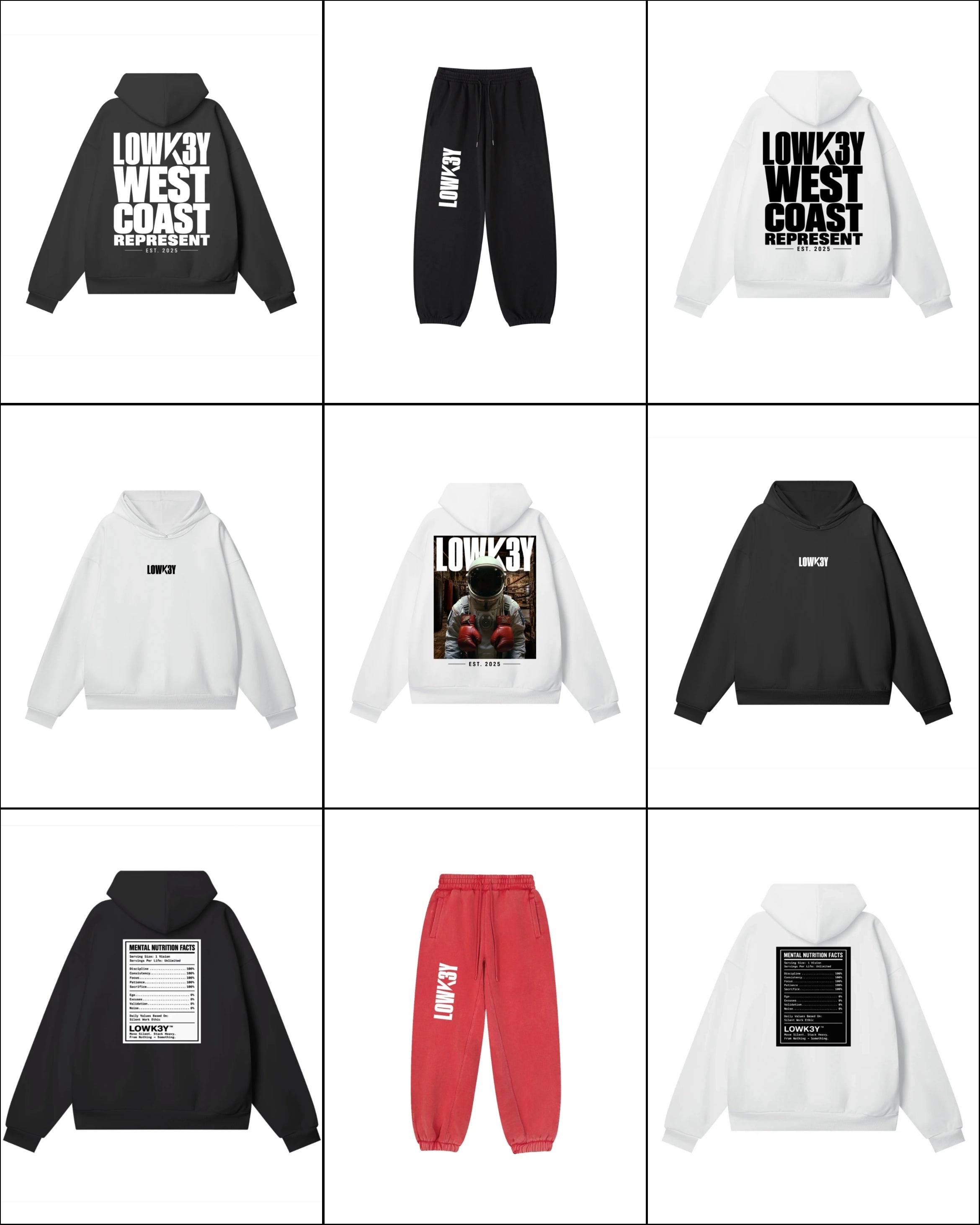
LOWK3Y approaches heavyweight hoodies with that standard in mind: crafted with intention for people stacking progress in private. The right weight is not about showing off a fabric number. It is about choosing a piece that can carry the work, the weather, and the version of you that refuses to stay small.
Choose the weight you will reach for when nobody is watching. The public result can wait. Build the uniform first.