
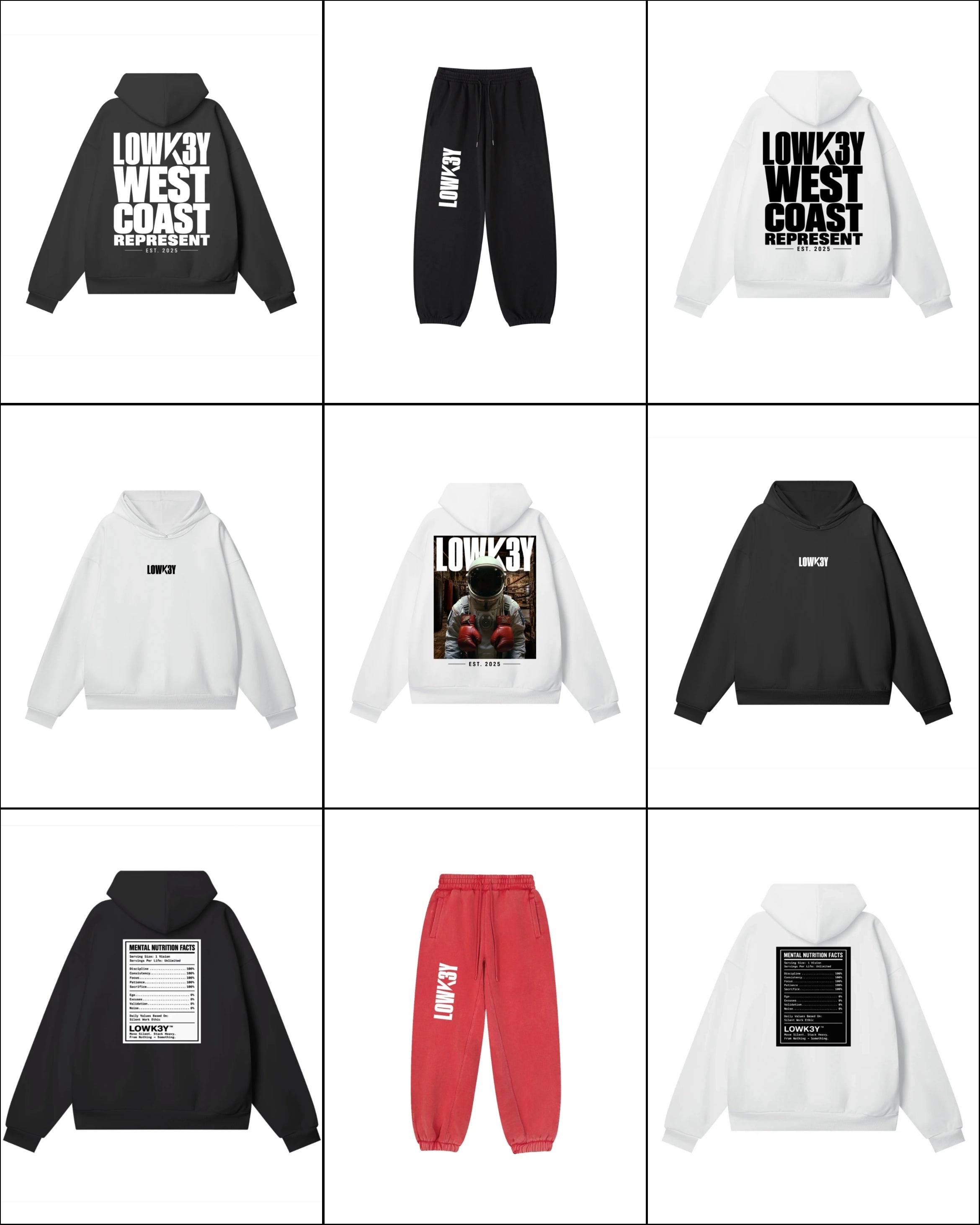


A hoodie is not just something you throw on. It is the layer that meets early calls, late-night sessions, cold walks, airport runs, and the work nobody claps for yet. In the conversation around fleece hoodies vs French terry, the right answer depends on what you demand from the garment: insulation, structure, movement, or an all-season edge.
Fabric decides more than comfort. It changes the way a hood sits, how a graphic holds its presence, whether a sweatshirt feels substantial in hand, and how often you reach for it when the temperature drops. Choose with intention. Your uniform should keep pace with the mission.
Fleece Hoodies vs French Terry: The Real Difference
Both fabrics are typically made from cotton, polyester, or a blend of the two. They can look similar from the outside, especially once a garment has been cut, dyed, and printed. The difference shows up when you turn the fabric inside out.
Fleece has a soft, brushed interior. The loops of the fabric are processed to create a plush, fuzzy surface that traps air close to the body. That trapped air is what gives fleece its warmth. It is the fabric built for cold mornings, winter city blocks, and days when a thin layer does not carry enough weight.
French terry has visible, unbrushed loops on the inside. It is softer and more substantial than a standard jersey knit, but it is generally lighter and more breathable than fleece. Those loops manage moisture and allow more airflow, making French terry a strong choice when the weather is mild or the day requires more movement.
Neither fabric is automatically premium. Construction is the difference-maker. Fiber quality, fabric weight, shrink control, stitching, ribbing, hood structure, and finishing determine whether a hoodie becomes a go-to piece or fades after a few washes.
Why Heavyweight Fleece Holds Its Ground
A heavyweight fleece hoodie has presence before you even put it on. The fabric feels dense, the body tends to drape with more authority, and a well-built hood keeps its shape rather than collapsing behind the neck. For streetwear, that structure matters. It gives graphics a cleaner canvas and gives a simple, logo-free piece a stronger silhouette.
Warmth is fleece's obvious advantage. The brushed interior creates a comfortable barrier against cold air, so you can wear it as a real outer layer through fall and winter. In New York or any city where the forecast shifts by the hour, that utility counts. A heavy fleece hoodie can handle a commute, a long outdoor line, and an unheated studio without asking you to layer up excessively.
Fleece also delivers the tactile experience many people expect when they invest in a premium hoodie. It feels soft from day one. When the blend and finishing are right, it can feel almost protective - a little armor for people who are putting in quiet work while everybody else is watching highlights.
There is a trade-off. Fleece can run hot indoors, especially in crowded spaces, warm offices, or climates that rarely get cold. The brushed interior may also pill over time if the fabric is low quality or washed carelessly. That does not make fleece fragile. It means a heavyweight piece deserves heavyweight care: wash cold, turn it inside out, avoid harsh cycles, and skip high heat whenever possible.
When fleece is the move
Reach for fleece when warmth and substance are non-negotiable. It is the better choice for cold-weather rotation, travel, outdoor work, recovery days, and any fit where you want the hoodie to be the main event. If your style leans toward oversized proportions, layered looks, bold statement graphics, or dense cotton texture, fleece supports that visual language.
It also makes sense when you buy fewer pieces and expect them to work harder. A serious hoodie should not feel disposable. It should earn a permanent position in the rotation, season after season.
French Terry Is Built for Motion
French terry has a different kind of confidence. It is lighter on the body, more breathable, and easier to wear across changing temperatures. You get the comfort of a sweatshirt without the full insulation of a brushed fleece interior.
That makes French terry especially useful for spring, early fall, cool summer nights, and indoor training or creative work. If you run warm, live in a milder climate, or regularly wear a hoodie under a jacket, French terry can make more sense than heavy fleece. It provides coverage without turning every errand into a sweat session.
The loopback interior also gives French terry an athletic heritage. It can feel cleaner and less plush than fleece, which appeals to people who want a more streamlined layer. A quality French terry hoodie can still look elevated, particularly when it has a precise cut, substantial ribbing, and a fabric weight high enough to avoid looking thin.
But do not mistake lighter for lesser. French terry is not the budget version of fleece. It serves a different purpose. The problem is that some brands use lightweight French terry to cut costs, leaving buyers with a hoodie that feels limp, loses its shape, and offers little more than a long-sleeve tee with a hood. Weight and construction still matter.
When French terry makes more sense
French terry earns its place when versatility leads. It is the hoodie you wear from the gym to a coffee meeting, from a cool morning into a warmer afternoon, or beneath a coat without feeling restricted. It also suits people who prefer a less bulky silhouette and want a layer that can stay on indoors.
If your daily pace includes movement, travel, training, or temperature swings, French terry can be the smarter technical choice. It keeps you comfortable without demanding that the weather be cold enough to justify it.
Weight Matters More Than the Fabric Name
The labels fleece and French terry only tell part of the story. Fabric weight, often measured in GSM or ounces per square yard, changes the entire feel of a hoodie. A lightweight fleece can feel less substantial than heavyweight French terry. A dense French terry can feel structured and luxurious, while a thin one can feel temporary.
For people who care about a hoodie as a defining piece, look beyond the first line of the product description. Consider the fabric composition, the weight, the fit, and the details that hold the garment together. A double-layer hood, reinforced seams, durable cuffs, a waistband with recovery, and quality printing all contribute to a piece that maintains its standard.
Cotton-forward fabrics usually offer a more natural hand-feel and a stronger visual texture. Polyester can improve durability, reduce shrinkage, and add warmth, depending on the blend. There is no universal perfect ratio. A 100% cotton French terry may be ideal for a soft, breathable everyday layer, while a cotton-poly heavyweight fleece can better serve a cold-weather hoodie designed for repeat wear.
Choose Based on the Life You Actually Live
Do not buy a fabric because a trend says it is the one to have. Buy based on the conditions you move through and the statement you want the piece to make.
Choose heavyweight fleece if you want warmth, structure, a plush interior, and a hoodie that anchors an outfit. It is for cold weather and bigger silhouettes. It is for a piece that feels built, not merely made.
Choose French terry if you want breathability, flexibility, and year-round reach. It is for motion, layering, and climates where a heavy hoodie spends more time in the closet than on your back.
For a focused wardrobe, there is room for both. French terry handles the transitional days. Heavyweight fleece takes over when the temperature falls and the fit needs more authority. The strongest rotations are not built around one fabric. They are built around knowing what each piece is there to do.
At LOWK3Y, that standard matters because a hoodie can carry more than a graphic. It can carry proof of the hours spent building when nobody was paying attention. The fabric should match that energy.
The Final Test Is Simple
Put the hoodie on and pay attention. Does the hood frame the fit? Does the fabric hang with purpose? Can you move without feeling swallowed, and can you stand outside without wishing you wore something heavier? Those answers matter more than a label.
Pick fleece when you need to stack heavy. Pick French terry when the day demands range. Either way, invest in the piece that makes you stand taller, work longer, and keep the progress private until the results are impossible to ignore.