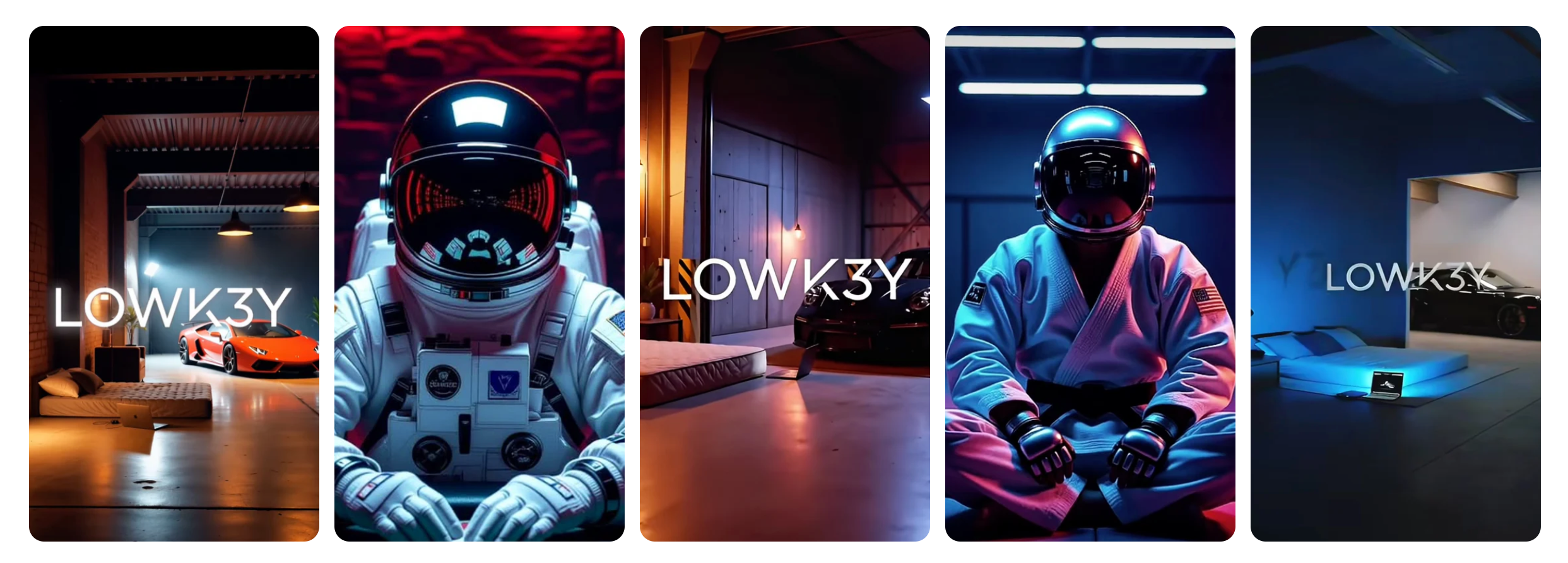


A.I. will open doors for the less connected and create opportunities for the visionaries, but only for the people willing to do more than press a button. The old system rewarded proximity. Who knew who. Who had the right introduction. Who could afford the right school, studio, agency, or zip code. That system is not gone. But it is no longer the only gate.
A focused person with a laptop, a point of view, and the discipline to keep showing up can now produce work that once required a full room of specialists. That does not make the work easy. It makes the starting line more honest.
Silence now. Build the proof. Shock them later.
A.I. Opens Doors for the Less Connected
For a long time, talent without access had to wait. A designer might have had the eye but not the software. A songwriter might have had the melodies but not the studio budget. A founder might have had the idea but not the network to turn it into a pitch deck, brand system, launch plan, and first campaign.
A.I. changes the cost of the first move.
It can help a solo operator turn a rough thought into a working outline, an email sequence, a product description, a visual direction, a market research brief, or a list of questions worth asking. It can give a creative a faster way to test concepts before spending money on production. It can give someone outside the usual circles a place to practice before the room is watching.
That matters because many people do not lack potential. They lack runway. They work full-time. They have family responsibilities. They are learning in private. They cannot call a friend at an agency, borrow a production team, or ask a connected relative to make an introduction.
A.I. does not hand them a reputation. It gives them a chance to create evidence before reputation arrives.
That is a major shift. The first draft is no longer reserved for people with expensive tools or insider access. The person who has been underestimated can now make the concept visible. And visible work travels farther than a hidden idea.
Access Is Not the Same as Advantage
There is a catch. More access does not automatically mean equal outcomes.
Everybody can use similar tools. Not everybody can recognize what is worth making. Not everybody can develop taste, understand a customer, protect a standard, or stay disciplined after the novelty disappears. A.I. can help someone create one hundred logo concepts in an afternoon. It cannot tell them which one carries a real identity unless they have learned how to see.
The new advantage is not simply being first to use a tool. It is knowing what the tool should never decide for you.
Your story is still yours. Your values are still yours. Your standards are still yours. The reason people trust you, wear your work, share your name, or invest in your idea cannot be generated from a prompt.
That is why visionaries should see A.I. as leverage, not a replacement. It can carry weight. It cannot carry purpose.
A generic output may be fast, but fast does not always last. If every brand uses the same references, the same phrasing, the same polished-but-empty visuals, the result is a crowded room full of echoes. The people who stand out will be the ones who use the speed to go deeper, not flatter.
The Visionary’s Edge Is Direction
A visionary is not just someone with big ideas. Plenty of people have those. A visionary has direction under pressure. They can see a future before there is proof, then make choices that pull the work toward it.
That ability becomes more valuable when production gets easier.
When anyone can generate a campaign concept, the difference becomes curation. When anyone can draft a business plan, the difference becomes conviction. When anyone can create content at scale, the difference becomes whether the content has something real behind it.
Think about a heavyweight hoodie. The garment is not powerful because it is called premium. It earns its place through the weight, fit, fabric, construction, graphic choice, and the person it speaks to. The same is true of anything made with A.I. The output is only the raw material. The point of view is what turns it into a statement.
The strongest builders will use A.I. to remove busywork and protect energy for the work that demands a human hand: making calls, building relationships, refining the product, hearing criticism, leading a team, and deciding what the brand will stand for when there is money on the line.
Private work still wins. It just moves faster now.
Build a system, not a shortcut
The shortcut mentality says, “How can this tool make me look successful?” The builder mentality asks, “How can this tool help me become more useful, more precise, and more consistent?”
That distinction is everything.
Use A.I. to organize the research you have been avoiding. Use it to pressure-test an offer. Use it to generate variations when you are stuck. Use it to rehearse a pitch before the real meeting. Use it to turn your notes into a workable plan after midnight, when the people with better connections are asleep.
Then edit hard.
Check the facts. Remove borrowed language that does not sound like you. Do not publish something just because it is clean. Make it true. Make it specific. Make it worth the audience’s time.
The person who treats every output as final will become forgettable. The person who treats every output as clay will build range.
A.I. Will Not Replace Trust
There are parts of progress that no tool can automate. Trust is one of them.
People buy from people and brands that feel intentional. They work with founders who follow through. They remember the person who respected their time, delivered what they promised, and stayed solid when the project got complicated. A.I. can help prepare the message, but it cannot make you keep your word.
It also cannot replace lived experience. If you have built from a small room, worked through rejection, learned a craft without a mentor, or carried an idea while nobody understood it, that experience has texture. It shapes your judgment. It gives your work a pulse that recycled content cannot imitate.
The less connected should not hear this as a reason to wait for permission. Build relationships anyway. Meet people. Be useful. Send the thoughtful follow-up. Support other people’s work before you need something from them. The network still matters, but you can approach it with a portfolio instead of only a request.
That changes the conversation.
Instead of saying, “Can somebody give me a chance?” you can say, “Here is what I built. Here is what I see. Here is how I can contribute.”
That is a stronger position. Not loud. Not desperate. Prepared.
The Real Risk: Getting Comfortable With Average
A.I. lowers the barrier to output, which means average content will multiply fast. More posts. More mockups. More plans. More people pretending movement is the same thing as momentum.
Do not confuse volume with progress.
The goal is not to produce more noise. The goal is to turn effort into assets: skills that compound, work that opens conversations, products with staying power, and a reputation that becomes difficult to ignore.
For some people, A.I. will become an excuse to avoid learning. For others, it will become a study partner that helps them learn faster. It depends on the discipline behind the screen.
If you are building a brand, do not let the tool flatten your identity. If you are building a career, do not let it weaken your craft. If you are building an empire, do not mistake borrowed polish for ownership.
Stack heavy. Study the room. Keep your standards expensive.
Make the Door Worth Walking Through
The opportunity is real, especially for people who have spent years outside the usual circles. But an open door means nothing if you enter without a plan.
Bring your taste. Bring your receipts. Bring the late nights that taught you how to work when nobody is clapping. Let A.I. handle part of the friction, then put your name on something that could not have come from anyone else.
The connected may still have a head start. Let them. Your job is to build enough skill, proof, and direction that the door cannot close behind you.